
 About Beijing

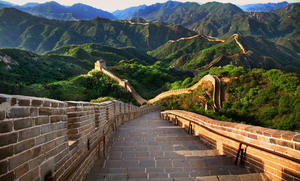 The Mutianyu section of the Great Wall was opened to tourists on May 1, 1986. Located 73 kilometers from Beijing proper, it joins the Juyong Pass in the west and Gubeikou in the east. A new 4,000-meter-long pathway has been constructed from the road. It can also be reached by cable car.
This well-preserved section was built about 1,400 years ago and reconstructed later during the Ming Dynasty. History of Ming Military Affairs explains why it was rebuilt.
When Emperor Yongle returned north and reestablished Beijing as the capital, he was exposed to attack on three sides. Harassment increased after the reign of Emperor Zhengtong, so work was begun to strengthen and lengthen the wall at Yalu River in the east.
The strategic importance of Mutianyu was obvious, as many battles took place there. It is said that during the Three Kingdoms period when Cao Cao exterminated Yuan Shao's regime, his army advanced through Mutianyu. In the mid-Ming years, the noted General Qi Jiguang was transferred from the south. As Military Superintendent of Jizhen, he built observation towers and provided storage areas for military weapons.
The highest observation tower in the Mutianyu section is 540 meters above sea level. Crenels and shooting holes are part of the solid construction. To the east, the Great Wall continues across the mountain ridges, to the west, it enters a point of strategic importance at a peak 1,044 meters above sea level.